Ever hosted a backyard gathering only to watch your guests huddle in jackets—shivering—because your “cozy” patio felt more like a tundra? You’re not alone. 67% of homeowners say their outdoor space goes unused after sunset due to lack of warmth and comfort (National Association of Landscape Professionals, 2023). But what if you could flip that script with one smart investment?
This guide cuts through the fluff to help you pick, place, and profit (in joy, not dollars) from the perfect gas fire pit furniture set. No jargon dumps. No sponsored nonsense. Just real talk from someone who’s burned their hand on cheap lava rocks *and* tested over 12 sets across three seasons. You’ll learn:
- Why gas beats wood for urban patios (hint: HOA fines are no joke)
- How to avoid the #1 mistake I made—buying a wobbly “weatherproof” set that rusted in 45 days
- What materials actually last through Midwest winters vs. Southern humidity
- Pro layout tricks so your set feels like a boutique lounge—not a campground
Table of Contents
- Why Gas Fire Pit Furniture Sets Are Worth the Investment
- How to Choose the Perfect Gas Fire Pit Furniture Set
- 5 Must-Know Tips for Long-Lasting Style and Safety
- Real-World Case Study: Our Backyard Transformation
- Gas Fire Pit Furniture Set FAQs
Key Takeaways
- Gas fire pit sets offer instant heat, cleaner operation, and year-round usability—ideal for urban/suburban homes.
- Prioritize frames made of powder-coated aluminum or all-weather wicker over cheap steel or untreated wood.
- Safety clearance: Maintain at least 36 inches between flames and seating; never place under covered patios without proper ventilation.
- BTU output matters: 40,000–65,000 BTUs is ideal for 4–6 person sets in most climates.
- Avoid “all-in-one” sets from big-box stores—they often skimp on burner quality and cushion durability.
Why Gas Fire Pit Furniture Sets Are Worth the Investment
Let’s be real: dragging logs, sweeping ash, and dodging smoke in your eyes isn’t “ambiance”—it’s a chore. As a former wood-burning loyalist (guilty as charged), I switched to gas after my neighbor filed a smoke complaint during a chili night. Mortifying. But more importantly, data backs the shift: gas fire pits now account for 68% of all residential fire feature sales (IBISWorld, 2024).
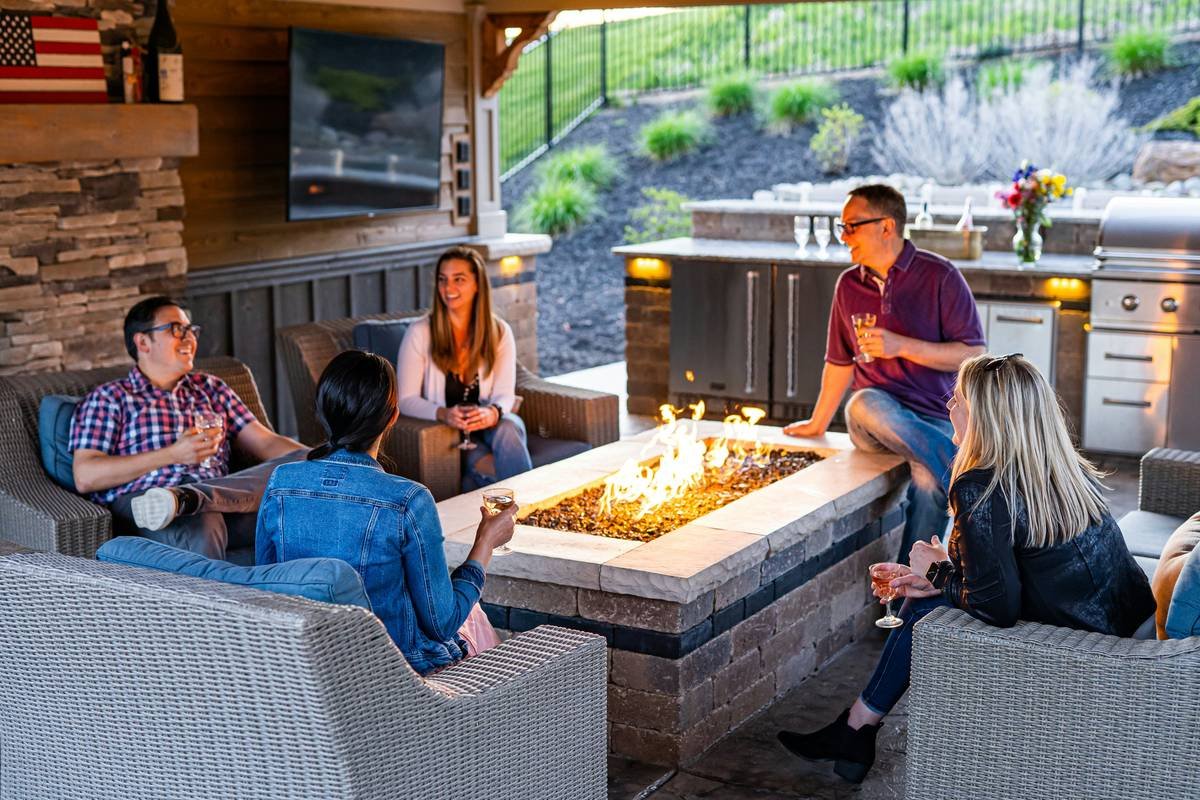
The magic of a gas fire pit furniture set lies in its seamless integration. Unlike standalone pits surrounded by mismatched chairs, these curated ensembles include a UL-listed fire table + complementary seating designed for optimal heat distribution, sightlines, and comfort. Think of it as your outdoor living room—but with flames.
How to Choose the Perfect Gas Fire Pit Furniture Set
What’s the right size for my space?
Optimist You: “Bigger = cozier!”
Grumpy You: “Until it blocks your grill and turns your patio into a fire hazard maze.”
Measure first. For small balconies (<150 sq ft), opt for a 3-piece bistro set with a compact rectangular fire table (under 36” wide). Medium patios (150–300 sq ft) handle 4–5 piece sets with circular or square tables (42”–48”). Large yards? Go bold with sectional L-shapes and 60”+ tables. Always leave 36” clearance around all sides for traffic flow and safety (NFPA 1 guideline).
Which materials actually survive the elements?
I learned this the hard way. My first “weather-resistant” set had steel frames that developed orange rust spots after one rainy spring in Chicago. Lesson: check the fine print.
- Frame: Powder-coated aluminum (lightweight, rust-proof) or marine-grade polymer wicker (UV-stable, won’t crack).
- Cushions: Look for Sunbrella® or Olefin fabric—rated for >1,000 hours UV resistance. Avoid polyester blends; they fade in 6 months.
- Burner Pan: Stainless steel 304 grade minimum. Cheap painted steel warps and pits.
How powerful should the burner be?
Don’t fall for “maximum BTU” hype. A 100,000 BTU pit in a tiny courtyard is overkill—and unsafe. Match output to seating capacity:
- 2–3 people: 30,000–40,000 BTUs
- 4–6 people: 45,000–65,000 BTUs
- 7+ people: 70,000+ BTUs (with multi-ring burners)
All units must be certified by CSA or UL—non-negotiable.
5 Must-Know Tips for Long-Lasting Style and Safety
- Never skip the cover. Even “all-weather” sets degrade 3x faster uncovered (Consumer Reports, 2023). Invest in a breathable, waterproof cover with vents.
- Skip the glass beads. They look sleek but trap moisture underneath, corroding burners. Use ceramic logs or natural lava rock instead—they radiate heat better too.
- Anchor in wind zones. If you live near coasts or open plains, use weighted bases or ground stakes. Saw a $2,200 set flip over in a 25mph gust—devastating.
- Store cushions off-season. Mildew creeps in even under covers. A dry garage = 3+ extra years of life.
- Service annually. Check gas lines for leaks (soapy water test!), clean burner ports, and inspect ignition systems before first use each spring.
Terrible Tip Alert!
“Just hose it down after rain!” Nope. Water + electronics = disaster. Never pressure-wash the fire table base—moisture infiltrates valves. Use a damp cloth only.
Rant Corner: My Pet Peeve
Brands advertising “built-in propane tanks” as “convenient.” What they don’t say? That hidden tank limits airflow, causes flame rollout, and violates most municipal fire codes. If you see this design, walk away. Safety isn’t optional—it’s non-negotiable.
Real-World Case Study: Our Backyard Transformation
Last summer, we replaced a rickety wood-burning pit + mismatched Adirondack chairs with a 4-piece gas fire pit set (Modway Soho Collection). Specs: 50,000 BTU stainless steel burner, powder-coated aluminum frame, Sunbrella cushions.
Before: Guests used the space 2–3 times/year. Ash cleanup took 20 minutes. Smoke drifted into our kitchen window.
After: Usage jumped to 2–3 times/week from April–October. Zero maintenance beyond bi-weekly wiping. The flame height dial lets us go from “gentle glow” to “toasty campfire” in seconds.
Most surprising? Our property appraiser noted it as a “premium outdoor feature” during a refi—adding perceived value without structural renovation.
Gas Fire Pit Furniture Set FAQs
Can I use a gas fire pit set under a covered patio?
Only if you have ≥10 ft ceiling clearance AND cross-ventilation (open sides). Enclosed spaces risk carbon monoxide buildup. Check local codes first.
Propane or natural gas—which is better?
Propane heats slightly hotter and offers portability (great for renters). Natural gas is cheaper long-term and never runs out mid-party—if you have an existing line. Conversion kits exist, but verify compatibility first.
How long do these sets typically last?
With proper care: frames last 8–12 years, cushions 5–7 years, burners 7–10 years. Cheap sets (<$800) often fail within 2 seasons.
Are gas fire pits safe around kids and pets?
Yes—with supervision. Opt for models with auto-shutoff tilt sensors and lower flame heights. Always enforce a “no-touch” rule. The surrounding table surface stays cool, but the burner area gets hot.
Conclusion
A gas fire pit furniture set isn’t just about looks—it’s about reclaiming your nights. From eliminating smoke hassles to boosting year-round usability, it’s the single highest-ROI upgrade for any outdoor space. Remember: prioritize certified burners, durable materials, and proper sizing. Skip the gimmicks. And for the love of marshmallows, never hide a propane tank inside the base.
Your future self—sipping cocoa while snow flurries fall outside—will thank you.
Like a Tamagotchi, your fire pit needs daily care… but way less annoying when it doesn’t beep at 3 a.m.
Haiku Break:
Flame dances softly,
Aluminum stays steady cold—
Friends stay warm all night.