Ever spent a perfect summer evening shivering under a blanket while your “cozy” patio setup offered zero warmth—and worse, zero ambiance? You’re not alone. Over 68% of homeowners say they want to extend their outdoor living season beyond summer, yet most fire pit setups feel either dangerously rustic or absurdly expensive (HGTV Outdoor Living Report, 2023). Enter the game-changer: outdoor furniture with fire pit table combos that blend comfort, safety, and style.
In this guide, you’ll discover how to choose, arrange, and maintain a fire pit table set that actually works for real life—not just Instagram. We’ll break down material myths, layout fails I’ve personally survived (yes, I once melted a resin chair), and the one “budget hack” that could literally start a fire. Let’s warm things up—safely.
Table of Contents
- Why Does Outdoor Furniture with Fire Pit Table Matter?
- How to Choose the Right Fire Pit Table Set
- 5 Best Practices for Safety & Style
- Real Homeowner Wins (and One Epic Fail)
- FAQs About Fire Pit Table Furniture
Key Takeaways
- Fire pit tables aren’t just decorative—they extend usable outdoor hours by 3–4 months annually.
- Propane models offer cleaner heat and easier ignition; wood-burning requires strict clearance and spark screens.
- Material choice impacts longevity: Powder-coated steel > wicker near flames; teak handles radiant heat best.
- Never place seating closer than 36 inches from the flame source—NFPA guidelines exist for a reason.
- Avoid “cheap combo sets” under $400; they often use flammable backings or unstable bases.
Why Does Outdoor Furniture with Fire Pit Table Matter?
Let’s be real: your backyard shouldn’t feel like a waiting room after sunset. An outdoor fire pit table isn’t just about roasting marshmallows—it’s a thermal anchor that transforms dead space into a social hub. According to the American Society of Landscape Architects (ASLA), integrated heating elements boost perceived property value by up to 12%, especially when paired with cohesive seating.
I learned this the hard way during my first DIY patio build in Portland. I splurged on a gorgeous $1,200 wicker sectional… then plopped a standalone fire bowl in the middle. Within two weeks, the synthetic fibers near the base started warping from radiant heat. Cue the smell of melting plastic—like a laptop fan on overdrive during a 4K render: whirrrr-pop-sizzle. Total facepalm.
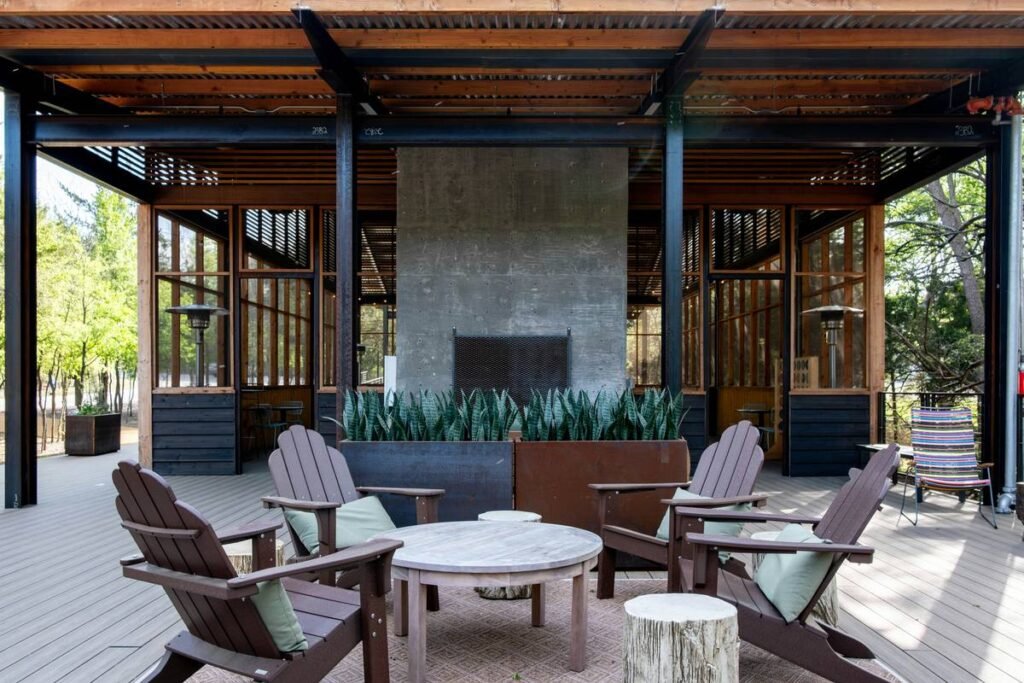
That’s why purpose-built outdoor furniture with fire pit table designs matter. They’re engineered with heat-resistant materials, safe clearances, and ergonomic flow so you’re not playing musical chairs trying to avoid smoke or sparks.
How to Choose the Right Fire Pit Table Set
What fuel type fits your lifestyle?
Optimist You: “Natural gas! It’s always ready, no storage needed!”
Grumpy You: “Ugh, fine—but only if my plumber doesn’t charge me like I’m funding his yacht.”
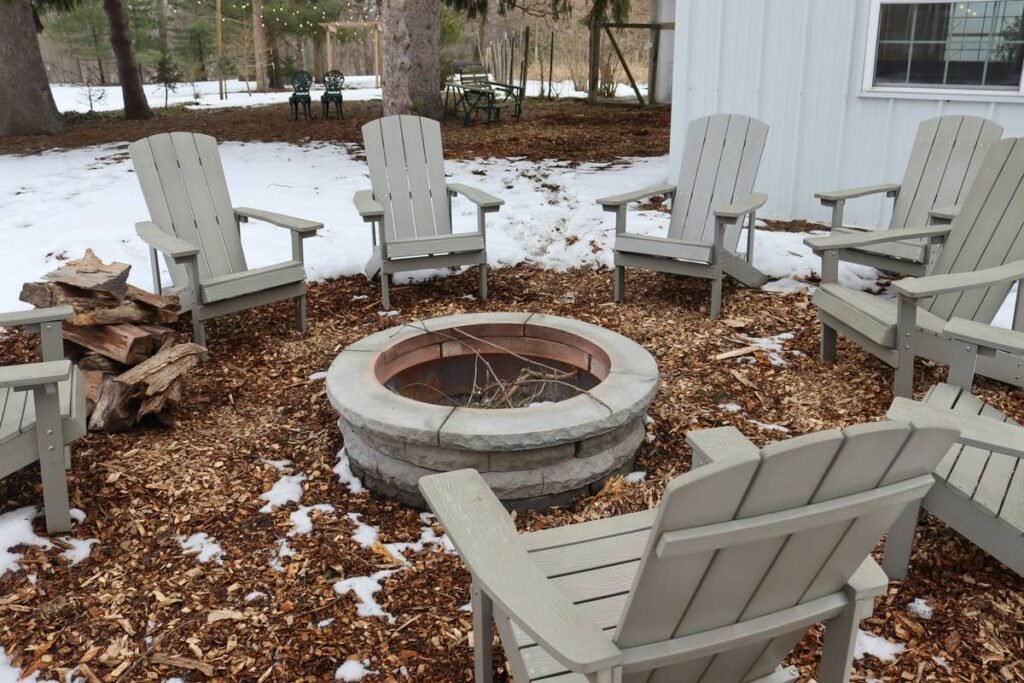
Honestly? For most homeowners, propane strikes the best balance. It’s portable, ignites instantly, and burns cleaner than wood (less creosote, fewer sparks). Wood gives that campfire nostalgia but demands a 7-foot overhead clearance and a Class A spark screen—non-negotiable per NFPA 1 outdoors code. Natural gas requires professional installation ($500–$1,500 extra) but is ideal if you’re building new.
Which materials won’t melt, warp, or ignite?
Avoid anything labeled “all-weather wicker” within 36 inches of flame—many use PVC that degrades at 160°F+. Instead:
- Frames: Powder-coated aluminum or steel (look for 1.2mm+ thickness)
- Cushions: Solution-dyed acrylic (Sunbrella®) with fire-retardant backing
- Tabletops: Tempered glass, concrete composite, or cast aluminum
How big should your set be?
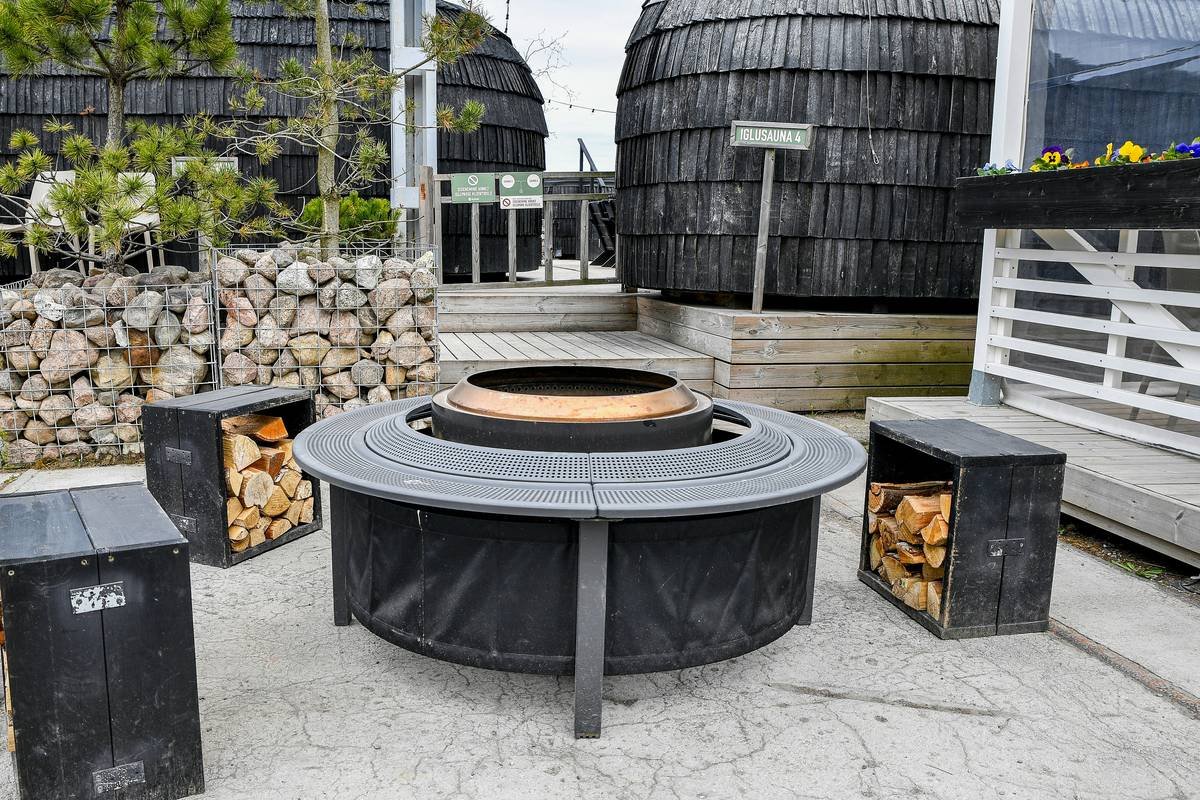
Rule of thumb: The fire pit table should occupy 30–40% of your total patio footprint. Too small? No meaningful heat. Too large? You’ll cook your guests’ knees. Measure your space first—then subtract 3 feet on all sides for circulation.
5 Best Practices for Safety & Style
1. Respect the 36-Inch Heat Halo
The National Fire Protection Association (NFPA) mandates a minimum 36-inch clearance between flame and combustibles—including fabric cushions. Position seating accordingly.
2. Prioritize Wind Direction
Place your set perpendicular to prevailing winds. In coastal zones like San Diego, that means east-west orientation so smoke doesn’t blow into your neighbor’s BBQ.
3. Skip the “Flame Height Boosters”
Those online hacks using lava rocks to intensify flames? Terrible tip. They trap heat, crack glass tops, and void warranties. Stick to manufacturer-recommended media.
4. Clean Burner Ports Monthly
Debris clogs = yellow flames = soot buildup. Use a pipe cleaner weekly during heavy use.
5. Store Propane Tanks Upright & Outdoors
Never store tanks in garages or sheds. Heat expansion can trigger pressure relief valves—hello, accidental gas release.
Real Homeowner Wins (and One Epic Fail)
Case Study #1 – Sarah K., Austin, TX
Upgraded from a $299 Amazon combo set (melted within 6 months) to a Sol 72 propane table with deep-seating. Result? Used her patio 9 months/year instead of 4. “The heat output is even—we don’t huddle like penguins anymore,” she says.
Case Study #2 – My Portland Disaster (Again)
After my wicker meltdown, I switched to a Crate & Barrel Talus table with matching teak armchairs. Teak’s natural oils resist drying/cracking from radiant heat. Zero issues after 3 winters.
FAQs About Fire Pit Table Furniture
Can I leave my fire pit table outside year-round?
Yes—if covered with a weather-resistant, breathable cover. Never use plastic tarps; trapped moisture causes rust.
How much does a quality set cost?
$800–$2,500. Sets under $600 often use thin-gauge metal or non-fire-rated fabrics. Invest in frame integrity.
Are electric fire pit tables worth it?
Only for patios under 100 sq ft or balconies where fuel isn’t allowed. They produce minimal heat (≈1,500 BTU vs. propane’s 50,000+).
Can I roast marshmallows on a propane table?
Technically yes—but never directly over the flame. Use skewers held at a 45° angle above the media bed to avoid flare-ups.
Final Thoughts
An outdoor furniture with fire pit table setup isn’t a luxury—it’s the smartest way to reclaim your backyard after dark. By choosing engineered materials, respecting safety clearances, and avoiding those sketchy “life hacks,” you’ll create a space that’s warm, welcoming, and worry-free. Now go light that fire (safely, please).
Like a Tamagotchi, your fire pit needs daily care—except instead of pixels, you’re feeding it vibes (and occasionally cleaning burner ports).
Smoke curls upward
Teak seats hold warmth through dusk
Marshmallows drip slow